07 July 2013

Furious Nature - The Uttarakhand Tragedy


Nature is not just known for its beauty, but also for many disasters. It is all about how carefully we treat our nature. When we cause so much harm to our own surroundings, it shows off the result in some means of disasters.Everyone of us would have heard about the recent disaster that had happened in Uttarakhand where many of them died and most of them were stranded. It is widely said that this Uttarakhand tragedy is not uncommon since that area is always prone to natural disasters. But some researchers and environmental enthusiasts say that it is also caused due to deforestation, construction of more dams that needs tunneling the ground and also due to some careless constructions of buildings, lodges and homes in the river bed which are being washed away in the floods.

Uttarakhand aka Uttaranchal is a northern state of India which was partitioned from Himachal Pradesh and Uttar Pradesh. As per wiki it is said that Uttarakhand is the 19th most populated state in India. Since Uttarakhand is mostly covered by mountains ( Himalayas in the northern side) and forests it acts an important tourist site. Uttarakhand is one among the most famous pilgrimage sites where the sacred temples like Kedarnath and Badrinath is located. It is where the two major rivers of India the Ganga and the Yamuna originates at Gangotri and Yamunotri respectively. They were said to be caused by the glaciers melts, lakes and streams in their place. Adding to this there are two national parks such as the Valley of Flowers and the Nanda Devi national park located in the Chamoli district of Uttarakhand which are considered under the UNESCO World Heritage Site. Many of the most famous hill stations of India like Nainital and Mussoorie are located in Uttarakhand.


Being such an enriched state, Uttarakhand has also been prone to earthquakes and floods always. But this time it has faced something bigger and harder than before I guess. As we all know there was a major cloudburst in the state this year in MID-June, it is said that it takes almost two or five years to resume back to normal. Since the tragedy has happened in the middle of the pilgrimage season, thousands of lives has been ruined. Due to this cloudburst, heavy floods had washed away many lives, buildings, pathways and bridges which made many people left stranded and helpless. Many lodges, hotels and houses have also been washed away by floods. The surprising fact is that despite this heavy downpour and lashing floods has washed away the compound walls of the Kedarnath temple, the Kedarnath Shrine has survived and is safe. And it is also said people inside the shrine has been saved while others were dead in front of the temple.


Images Courtesy : Ibnlive.com

But anyhow people whomever have survived this calamity had said that they have found and seen God in the Indian army and the ITBP ( Indo- Tibetan Border Police ) who played a brilliant and vital role in rescue operations. NDRF ( National Disaster Response Force )and NDMA ( National Disaster Management Authority ) have also done their part in the rescue operations. They used some ladders, ropes and even constructed small winch like machines to evacuate people. Most of all the IAF ( Indian Air Force) have also done a major Chopper evacuation to rescue stranded people. But the hardest part is many people have missed their loved ones.

Salute to all the brave hearts of the Indian Army, IAF, ITBP, NDRF, NDMA and some adventurer's who played a vital role in saving lives.

Many people who went there along with family members, have missed some or whole while returning back. It is reported that some people who have been rescued have placed some camps there and are waiting for their family members with hope. Despite these rescue operations, as I have read yesterday in the web that almost 1200 children were still missing. And the most terrible part is a 3 year old girl who is rescued with fractured legs is missing her family. She was found alone at Gaurikund and she got treatment at Doon hospital, Dehradun and got recovered now. Unfortunately this young child couldn't find her family yet. Hope their family reaches her soon.

Here I'm sharing few websites through which you can help since there are still missing peoples and relief's are being distributed.

http://chennai-cares.blogspot.in/
http://www.savethechildren.in/
http://www.giveindia.org/

'Google crisis response' has played a vital role to find the stranded people. They have also provided maps related to floods. Additional information's were provided in PTI.
Uttarakhand Floods Information as provided by Google :

Uttarkashi                                : (+91) 1374-226461
Chamoli                                   : (+91) 1372-251437, 9411352136
Rudraprayag                            : (+91) 1364-233727, 9412914875
Control Room (Uttarakhand)   :  (+91) 135-2710334, 9557444486

Since many people are still missing, the NDRF are planning to deploy some devices to trace them. As per this move, they have accepted to use a drone named 'Daksha' designed by Dr.Senthil Kumar of the Madras Institute of Technology ( MIT ). Here's an article from The Hindu Newspaper about it.
http://www.thehindu.com/

And kindly check this following link for some information regarding the cause of floods, how it can be tackled etc.,
http://ibnlive.in.com/news/

Preventive measures for such Natural disasters :

                   * We can't stop a natural disaster, but still we can avoid some of the causes of it. First thing is as much as we can, we must stop constructing buildings in or near the river beds.

                   * We must stop deforestation which is a very concerned issue. By cutting down the trees, we ourselves are creating damage to ourselves. By planting trees or conserving the existing trees we can make sure that excess water is consumed by the roots of the trees. In places like Uttarakhand, deforestation in mountains causes the landslides. It is said that planting Oak and Pine tress in these places could help to resist such situations.Have a look at this link in the Economic times about this: http://economictimes.indiatimes.com/

                   * A proper rain water harvesting system and drainage system has to be constructed in a way that  it collects excess water. It is said that proper maintenance of these systems can avoid landslides.

                   * Constructions of dams must be regulated properly.

                   * Weather forecasting systems can be updated and regulated properly.

Hope we can still handle such situations wisely by studying the nature of our locality and regulate the activities according to it to avoid major disasters.

Hoping that everyone finds their missed loved ones soon.

20 June 2013

Birdwatching - A recreational and a colourful activity


Birdwatching is the practice of observing birds and it is considered as one of the recreational activities. I would regard it as a blissful activity. Bird watching can be done using binoculars, telescope and even with a naked eye. It is believed that bird watching has been in practise as a hobby since 1968. Bird watching activity is not merely a refreshing activity, but it also paves way for identifying and knowing some birds of our own locality.


As I myself haven't tried this officially, I would like to share some of the procedures to be followed for bird watching that I read while surfing in the Internet.

Steps for Bird-Watching :

* First get an up to date Bird guide of your locality,

* Get a pair of binoculars( make sure it is of light-weight),

* Find friends of similar interests to accompany you,

* Start bird watching in the morning as birds would be busy in search of food and building nests. An ideal time for bird watching is early morning or just few hours before sunset.

* Start finding the birds from your own garden or backyard,

* Be quite, alert and attentive enough to hear the bird chirps or songs which makes easy to locate them,

* When you find a bird check it in the guide. Dont look for a similar colour of bird as in the guide, just check the whether it has similar features as colour many vary at times, the characteristics remain the same.

* Note down all your findings,

* Make sure that you don't disturb any birds while the activity. Maintain some distance so that they dont flew away or attack as you may near their nests. Do not disturb their privacy.

* Place some bird feeders in your garden or balcony so that you may invite many birds and you could easily witness different birds of our locality.

* Make sure that you hide in a place while capturing some pictures of them or noting them so that the birds wont get scared.

* Last but not the least, try your part in safeguarding their existence.

Birdwatching in India :

I was amazed while surfing about birdwatching in India. India is believed to have around 1250 species of birds and hence it acts as a kingdom of birds. It is said that out of 27 orders and 155 families of birds species that have been noted down by many bird enthusiasts around the world, India has 20 orders and  77 families. Despite having such richness in our biodiversity, we are aware of only fewer kind of birds. It is clear that we are less aware of our biodiversity and we do rarely spend time in knowing about our biodiversity and yes birdwatching activity would help us here in such situations. Despite living a incessant life in today's world, we can spend few hours in the weekends to relax ourself in such kind of activities.

Bird lovers have a look into this website - http://www.indiabirds.com/
I just love it. You can hear the sounds and chirps of many different birds of India in this website. You can also check the videos and qulaity pictures of Indian birds here. Bird lovers don't miss this site.

Birdwatching in Chennai :

Chennai might be the hottest place ever in summer. Despite that I read that Chennai still acts as a haven for more than 200 species of birds. As Chennai is located at the coromandel coast of south India, the geographical features of Chennai plays a vital role in attracting many birds. Most of the birds visit Chennai during the seasons from October to March.

Here's a list of places where you can do birding/birdwatcing in Chennai :
  • Adyar Eco Park/Tholkappia Poonga (Situated on the banks of Adyar Estuary),
  • Chembarambakkam Lake,
  • Guindy National Park,
  • Indian Institute of Technology( IIT ) campus, Madras
  • Kelambakkam Muttukadu Backwaters ( Best time to visit : November to February),
  • Karikili Bird Sanctuary ( located 6 kms away from Vedanthangal Bird Sanctuary ),
  • Madhavaram and Manali Lakes ( Best time to visit during NorthEast Monsoon),
  • Mudaliarkuppam Backwaters,
  • Nelapattu Bird Sanctuary,
  • Nanmangalam Reserve Forest,
  • Pallikaranai Marsh ( Best time to visit : November to May),
  • Pulicat Lake/Shar Road and Annamalaichery Backwaters,
  • Siruthavur Lake,
  • Theosophical Society Gardens,
  • Vedanthangal Bird Sanctuary ( Best time to visit : November to February) and
  • Vedanthangal scrub and reed bed.
Note : Check with the concerned authorities before visiting any of these places as they require permissions.

Apart form all these places, there are some other places where native birds can be found more than migratory birds. It was interesting to know about an unknown and uncommon place for bird watching in Chennai. I found this information in one of the websites I surfed on the Interent. Probably some of them may know or may not know this place located between Tiruporur and Tirukazhukundram. It is said to be reserve forest area where we can witness a lot of native birds and hence note that you don't get into the reserve forest area without permissions.

Here I'm sharing some pictures of birds in Chennai from the web :

Indian Robin
Rose Ringed Parakeet


Purple Rumped Sunbird- Female
Common Myna

 
Common Tailor Bird

Asian Koel


Spotted Dove
 
Red vented Bulbul


Greater Flamingo in Pulicat Lake
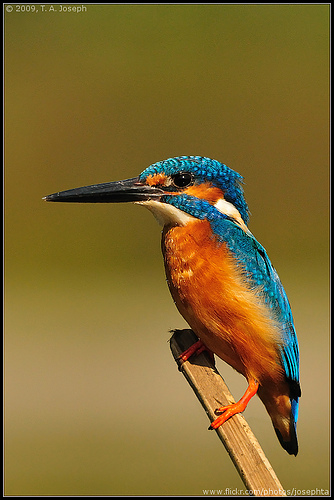
Small Blue Kingfisher


Images Source : Internet
There are many more birds of Chennai. You can check the list of birds of Chennai in this link : en.wikipedia.org/wiki/

Keep exploring about the birds around your place and have a touch with our biodiversity to know about the hidden values of our environment.

Thanks for reading :)

05 June 2013

A fragrant day at The Ambipur Indiblogger meet at Chennai


Hi all. I'm so glad to share about the recently ended Ambipur Indiblogger meet(26th May 2013) in Chennai at the Hyatt Regency, Annasalai. Since it was my first ever meet I was little nervous and excited about it and at-last I had a wonderful experience there with the blogger friends. Kudos to Indiblogger and Ambipur(air freshener) for arranging such a remarkable event. It was a great platform for the bloggers to interact with each other and to share their views on various topics.

Here's the schedule for the event :
Registration-01:00 PM, Just the Beginning-01:30 PM, 30 Seconds of fame-01:40 PM,
Lunch-02:30 PM, Smelly to Smiley-03:15 PM, Live & let comment-04:15 PM, IndiForum-04:45 PM, Photo Session-05:15 PM, Head home & keep Blogging-05:30 PM        

I was there by 12.40 PM at the venue and I was asked by the IndiTeam to wait in the lobby until the event starts. While waiting there I found bloggers similar to me who were also came for their first meet. We were discussing on various issues until the event started. The event started with our registration and we all got settled in our place and got to introduce our-self with fellow bloggers in our table. Then the Indiblogger team started with some games and gifts in which all of us participated. Two of our lucky blogger mates won the Samsung Galaxy S4 for their tweets on the event. Then it was followed by introduction part where few of our bloggers got a chance to introduce themselves. Since the attendees were more than 200, only few of us got the chance.


Then came the Lunch time. The food was awesome which included desserts, biriyani's, malai kofta and many more interesting dishes. Then after lunch we were made to do some exercises to keep us awakened after a heavy lunch ;) Then people who were in collar-less t-shirt or dress won a movie ticket each and I was one among them ;) Then a marketing person form Ambipur- the event sponsor came up with some interesting information on their product and explained us about how it works in the process of converting 'Smelly to Smiley' moment. Then few of our bloggers asked some queries to him about the product. Later all of us were given with an Ambipur car aqua air freshener. There were many fragrances of Ambipur and I got the 'Newzealand Springs' fragrance.

The interesting and funny moment of the event has came along then. We were separated into groups based on the flavor and each groups were given a topic to make a skit performance featuring Ambipur in it. Well after the announcement of the topics, we all got into our group to discuss on the skit and we had a wonderful time while doing the skit. It was totally a fun. Every group did their best with innovative ideas. As like their theme 'Escape into Freshness' , we all enjoyed the fragrant evening with fresh thoughts and moments.

During our team discussion on Skit - NewZealand Springs
At the end of the event we all got to be a bit more attentive as many people spoke on various causes that they were a part of. Some campaigns and causes like 'Dark is beautiful' , 'AIESEC' , helping Govt.school students of Tambaram and many more valuable causes were discussed and I hope it would have helped to reach a wider audience that day. All credit goes to the Ambipur and Indiblogger team :) They gave us a nice platform to explore our skills, ideas and to meet our fellow bloggers. Last but not the least we all gathered for a group photo and each of us got an Indiblogger T-shirt. Finally we had some evening snacks along with tea and we dispersed back home finishing a wonderful event.

Pictures Courtesy : Indiblogger/facebook

Thanks a ton for the Ambipur and Indiblogger team for such an unforgettable event :) Looking forward to the next meet :)

25 May 2013

Lavender - The Lovely and aromatic herb


Here's the next post on my favorite 'Lavender'.  Lavender which is well known for its fragrance is indigenous(native) to the mountain regions and can be grown in gardens or fields.This fragrant herb is native to Africa, southern Europe, the Mediterranean region, southwest Asia and southeast India. But now it is widely cultivated all over the world for its aromatic nature. Despite its aroma, the other notable feature is the color of its flower . one of my favorite color indeed. It gives you a pleasant sight while seeing its flowers in bloom over in the garden or a field. It is also well known in biblical times as 'spikenard'. As I seen somewhere in the web, I came to know that the first use of this name 'Lavender' for a color term in English was used in 1705. Lavender has a great history for its healing properties. It symbolizes elegance, silence and spirituality. You can read the meaning of Lavender here : http://www.lavender-flower.net/


The lavender herb grows at its best when it has a good exposure to sunlight. Lavender is well known for its scent right from ancient times. Lavender is cultivated for its dried flowers and oil. It is believed that smelling the lavender flowers or the extract from the flowers which are made into oil can be used to relax the body and mind which produces a soothing effect. Lavender (Lavandula angustifolia) belongs to the family Lamiaceae. It has 39 species. Lavender Lavender herb has green leaves and long spikes which bears the purple-blue flowers. The flowers usually bloom from June to September.

Types of Lavender :

                      ~Lavandula angustifolia (English Lavender)
                      ~Lavandula dentate (French Lavender) and
                      ~Lavandula stoechas (Spanish Lavender)

In India, Lavender cultivation can be well suited in Himalayas, but it is being experimented all over India. Near the manasbal lake, north of Sringar lavender is grown in a filed of 50 hectares by a woman, Dr Gazalla Amin. Click here for more on it - http://www.indianexpress.com/

Here are some cultivation process :
http://www.buzzle.com/


Here's the picture of world's largest Lavender garden. Located at Tasmania (South to Australia)

Numerous hidden values of Lavender :

                There are numerous values and uses of Lavender. It has various commercial, medicinal,culinary uses and above all for healing purposes. It's essential oil is widely used in making scents, perfumes for its aroma.

             ~ Lavender oil is used for antiseptic and anti-inflammatory properties. It is nicknamed as 'first aid in a bottle' for its multiple medicinal properties. Lavender was used in World war I and II when there was scarce in medicines.
             ~ It is used for relieving the muscular aches, sprains, stress, anxiety and many more.
             ~ It is used to treat insomnia, stomach problems, infections, poor vision, nerves disorder and dizziness and used in aromatherapy.
             ~  It is believed that the smell of lavender gives you tranquility and it eases you of depression and stress.
            ~ On the commercial front, Lavender is mostly used to make perfumes which are quite unique from other. It aroma increases the mental activity and removes you from nervous problems.
            ~ On the culinary front, candies are made from the Lavender flowers and they are used in making cakes. Since the Lavender flower has nectar in abundance, it attracts more bees which gives honey.They are also used in salads and for decorative purposes. Lavender herbal tea made of its flowers is used to promote sleep and to cure nervous disorders and stress.
            ~ Most importantly it is used in healing process like relaxing the mind and body. It is said that Lavender seeds or flowers placed under a pillow gives some relaxing and tranquil experience.
                            

Pictures courtesy : Internet

I was quite surprised and delighted to know about these valuable and hidden qualities of my own favorite Lavender and happy to share this with you all.

Thanks for reading.
Have colorful and Blessed days ahead. :)

03 May 2013

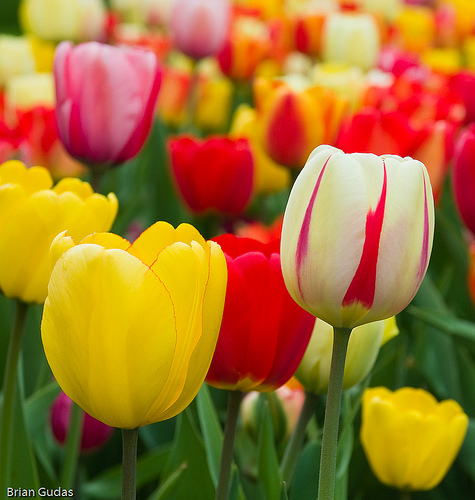
Tulips - The Vibrant and Elegant Flower


Tulip is a perennial( long lasting) plant that belongs to the family Liliaceae and it is believed that Tulip has around 150 species.. Tulip is native to Southern Europe, North Africa, Iran, Japan and Central Asia.. Tulips are always known for its vibrant colors, simplicity and elegance..That's what attracted me indeed..


If you are eager to know the history and meaning of Tulip flowers, check the following links :
proflowers.com/guide
buzzle.com/articles

Apart from their original species, many hybrid species are cultivated in some gardens and fields..Tulips are well adapted to the hilly, mountainous areas with moderate to cool temperature.. I have read somewhere that Tulips can be grown successfully in places where their altitude range from 1300 to 3000 feet high from sea level.Tulips are kept dormant for a while so as to enrich their growth.. As I surfed on the Internet, I have found a term called 'vernalization' , while mentioning about the growth of Tulips.. Vernalization is the phenomenon of cooling a seed during germination for accelerating their growth when it is planted..Tulips are one of the most famous spring flowers  in the world.. As we have seen before, Tulip has 150 species and it also has 3000 varieties.. Tulips are available in number of vibrant colors such as Red, Pink, Purple,White, Yellow, Orange and many more.. They grow at an average height ranging from 10 cm to 70 cm..

Tulips can be classified based on their blooming.. Some of the notable types of Tulips are,

*Early flowering Tulips
(They blossom in the period of March to early April- comprising Red Emperor, Water Lily
and Greigii Tulips ),
*Midseason Tulips
(They blossom in the period of April and early May - comprising Swan wings Tulips, Parrot Tulips
and Darwin Tulips)
*Late flowering Tulips
(They blossom in the period of May alone - comprising Rembrandt Tulips Fringed Tulips)

Tulip Cultivation in India :

           In India, Tulips have certainly gained more admiration among the floriculturist(The cultivation of flowering and ornamental plants) on the account of congenial climate in the hilly areas, especially in places like Kashmir . Asia's largest Tulip Garden, 'Indira Gandhi Memorial Garden' aka Siraj Bagh is located in Zabrawan range , Srinagar, Kashmir. It is where the annual Tulip festival is organised. As this garden is located in the shores of the Dal lake, tourists who arrive to enjoy the Dal Lake drive never miss this Tulip festival where these elegant Tulips are spread over 5 hectares of land. This Tulip festival is organised during the months of March and April annually. This year the Tulip festival 2013 was organised from 1st of April to 14th of April. These Tulip flowers can be witnessed in full bloom for 15-20 days depending upon the temperature.

Here are some pictures of Tulip festival 2013 in Kashmir :


Images Courtesy  : Jet-ways travel in Facebook


Check the following link for some more wonderful Tulip pictures :

lightstalking.com/tulips


I was planning to post this just before the start of the festival but it got delayed due to some technical problems. If you get the chance to tour here never miss the Tulip festival next year.

Have Colorful and Blessed days ahead :)
Thanks for reading.


26 March 2013

Stupendous values of Bael Tree


Bael (Aegle marmelos) - one of the prominent indigenous(native) trees of India. But now it is widely found in Southeast Asia. The Bael tree is considered to be a sacred one in India. The Bael leaves are used as holy offerings to Lord Shiva traditionally. It has been used by the Indians over 5000 years. It is believed that the Bael tree has originated during the vedic period(about 2000 B.C - 800 B.C) and it was mentioned in the  Yajur veda. It is believed that having this tree in our surroundings purifies and cleanses the environment. The Bael tree has stupendous medicinal values. They are one among the top ten herbs that are frequently used in Ayurveda. Almost all parts of this tree including root, stem, leaves and barks have medicinal values.
Click here to know more on sacredness of Bael tree.

Nomenclature :

Scientific Name     :   Aegle marmelos

Tamil Name          :   Vilvam (வில்வம் )

Sanskrit Name      :   Bilwa / Sirphala

Hindi Name          :   Sirphal

English Name       :   Wood apple / Stone apple / Bengal Quince

Common Name   :   Bael


Here's an image of the Bael tree sapling that I took at Sai Baba Temple, Mylapore, Chennai :


Another notable feature of Bael Tree is that they can withstand wide ranges of temperature, soil types and water logging. This holy tree can be planted in any type of soils having a pH range of 5 to 10. They bear the temperature ranging from -7 degree Celsius to 48 degree Celsius. Hence in India, it is believed that this tree can grow at places where other trees can't be grown and once planted they need just a little care. They can bear drought even for long periods. Being a sacred tree, the Bael trees are mostly found in the temple grounds. Only few people plant this tree in their gardens. The Bael trees are medium sized trees of height ranging from 8 to 18 meters. It has greenish-white flowers. The Bael fruits are hard and woody with smooth pulp. The fruits takes up to 11 months to ripe on the tree.


Images of Bael Tree and fruits from the Internet :


Medicinal values of Bael Tree :

As we read before, almost every parts of this Bael tree possess stupendous medicinal values. The Bael fruit has an immense value when it is about to mature.

             >* The half-ripe or unripe pulp of the Bael fruits are considered as stomachic. The oil from the Bael tree can be used against 21 types of bacteria as per research.

             >* As per Ayurveda,diarrhea and dysentery without fever can be cured using dry Bael fruit. and it acts as a tonic for heart and brain. It is also used for curing tuberculosis.

             >* The Bael leaf extracts are used to control the blood cholesterol levels. They are believed to be more effective in decreasing the cholesterol levels when compared to modern medicines.

             >* It is also said that the Bael leaf extracts can reduce diabetes to an extent. After some researches, it has been proved that the Bael leaf extracts have reduced blood glucose levels up to 54 %.

             >* Peptic ulcer can be cured by concoction of Bael leaves.

             >* Leaves, bark and root of the Bael tree are used in the treatment of snakebite.

             >* The ripe Bael fruit is also used to cure constipation and gastrointestinal problems. And it is used in many other ways for respiratory problems.

Note :  Do not follow or try this voluntarily.Kindly consult doctors or experts before consuming.

Some more facts on Bael Tree :

              As I read up on the internet the Bael fruit can be consumed like other fruits either when they are fresh or dried. They can also be made into juices as like lemon juice. The small shoots and leaves are used for green salads. It is said that the fruit also has some binding qualities which are used along with lime plaster for making water proof wells and mixed with cement for building walls in rural areas. It is good to know about these facts as I read on internet and would be nice if adapted everywhere. Then another interesting fact is that the Bael fruit pulp is added to the water colors by the artists to apply as a protective coating on their paintings. The Bael fruit is also used in the preparation of candy, pulp powder, nectar, toffee, slab, squash and many more.

               
Thanks for reading.