Showing posts with label Mother Nature. Show all posts

04 August 2014

Blueberries - A Treat to eyes as well as to your health !!!


Hi all !!! Hope everything going good around you all. In this post, I gonna share about one of the fruits that I have admired the most , not just for its taste, but for its wonderful color !!! Oh God ! What was your creation ! I wondered and loved it much :) There were none other than Blueberries :) 

Blueberries are available in various colors such as green, greenish pink, bluish pink and also available in my favorite color purple / indigo color.  

Nomenclature : 

Scientific Name   :  Vaccinium corymbosum

Tamil Name        :   அ வு ரி நெ ல் லி  @ நா க ப் ப ழ ம் 

Hindi Name        :    Nilabadari @ Feera

English Name     :    Blueberry


Blue berries are said to be native to North America, Europe and Asia. Blue berries were highly ranked among other fruits for its antioxidant property. They were known as perennial flowering plants.

Lets look on to some colorful blueberry images that I have collected from web :


Blueberry Cultivation in India :

Blueberries are cultivated at many places around India as well. Most popularly and successfully it was grown at a firm called Abonna Plants located at Siliguri of Darjeeling District. Siliguri is loacted at the banks of Mahananda River and the foothills of the Himalayas(One of the Nature's paradise in the world) !!!

You can check about the agriculture practices of Blueberry in India through these links below :

abonnaplants.com
agriculturalproductsindia.com/fruits/fruits-blueberry
Facebook page : BlueberryPlantsInIndia


Astonishing Health Benefits of Blueberry :

        *Blueberries are said to be rich in manganese, magnesium, iron, potassium, vitamin C, vitamin K , riboflavin, niacin, folate and  fiber.

          *As per some studies, blueberries are said to have various phytochemicals which are believed to reduce the risk of cancer and inflammations. A well known University in U.S, has made a study which says that blueberries helps to block the growth of tumor cells.

           *Amidst, all its properties, Blueberry juice was said to have numerous benefits. It was believed to improve memory power and enrich brain. Moreover, it also helps in reducing blood sugar and symptoms of depression.

           *It helps against skin wrinkles which helps to make your skin to stay stable always. It was believed to soften your dry skin.

           *It was believed to reduce the risk and severity of allergies. Moreover, they help to preserve vision power, reduce digestive problems.

            *Blueberries such as cranberries , are said to contain some compounds which helps to prevent harmful bacteria affecting the bladder.

            *As per the study in New University of Michigan, blueberries are believed to reduce your belly fatness and reduces the risk factors for cardiovascular disease and metabolic syndrome.

References :

health.com
care2.com/greenliving
Wikipedia

Here's the picture of BLUEBERRY JUICE taken in my office :)


It was a wonderful experience to try them for the first time and most importantly it was a visual treat(due to it's mind-blowing color)  !!! To be honest I enjoyed more watching it rather than drinking it !!!

Hope you all would try this treat as well !!!
Have a Blessed & Colorful week ahead :) 

18 May 2014

The Pulpy - Bubbly Tomato


Hi all. After a quite long time, here I'm back to post on TOMATO (Solanum lycopersicum) - one of my all time favorite ingredient. Lets have a look over its use, origination and its multi-purpose values here..Tomato the red pulpy fruit as well as vegetable is a species that was said to be originated from South America. But now it is quite commonly cultivated throughout the world. The word Tomato was derived from the Spanish word 'tomate' and it was said to be first appeared in 1595. The average weight of a Tomato was said to be 100 grams approx.


As per some statistics, India ranks second in the top production of tomatoes in the world. Tomatoes are said to be rich in Lycopene which has many health benefits. Lycopene is a pigment present in almost all red fruits/veggies. It is believed that there are nearly 7500 varieties of tomatoes available all over the world which includes Cherry tomatoes, grape tomatoes, Roma/Bangalore tomatoes, Heirloom tomatoes etc.,

The Tomato plant can be grown at almost all seasons in India. The plant can withstand upto 27 degree Celsius but they can't withstand frost. But their peak season is said to be from June to September.


Tomato is one of the prominent ingredient used in the form of both as a veggie and a fruit. Tomatoes are available in different colors , sizes and flavors. It is one of plant which is mostly welcomed by kitchen gardeners, since it can be grown at any moderate temperature zones. Due to its high acidic content, tomatoes was said to be the most canned fruit or vegetable.

Astonishing health benefits of Tomato :

            ~* Tomatoes are rich in Vitamin A, C and K. They are fat-free.
            ~* Just a single serving of tomatoes is said to give you 2 grams of fiber and they have rich water content.
            ~* Among all other fruits & vegetable, tomatoes were said to provide best ever protection against ihgh blood pressure, high cholesterol , heart diseases and strokes.
            ~* Tomatoes are widely used for protecting the skin and making it healthy. Beta-carotene enzyme present in tomatoes helps in protecting your skin against sun light damage and UV light damage.
            ~* The 'Lycopene' enzyme in tomatoes, helps in strengthening your bones.
            ~* Since tomatoes are rich in Vitamin C, they are the best antioxidants and helps to fight against cancer.
            ~* Tomatoes which are rich in folic acid, helps against depression .
            ~* Tomatoes helps in digestion .
            ~* Due to its high acidic content, tomatoes helps in curing pimples, rough skin, oily skin and aches.
         
A single post is not enough to explain all of its benefits. Lets check more about tomatoes in upcoming posts.
Lets check out some tomato face masks that gives you a healthy skin ..


Tomato Face Masks

For sun damage: Take 1-2 fresh tomatoes and mash them to form a pulp. Add a tablespoon of curd along with some oatmeal. Apply this mixture on your face, leave it for 5 or 10 minute before washing it off with cold water. This face mask will not only cure your sun burnt skin but also make it glow.

Against acne: Mix mashed tomatoes with a tablespoon of lemon juice and apply it on your face. Leave it until it gets dry. It is a very effective face pack to obtain glowing skin, remove skin oiliness and get rid of acne.  Most of all it helps in curing premature aging signs.

For fairer skin: Add a tablespoon of sandalwood powder to a mixture of tomato juice and lemon juice. Blend it until it becomes a paste. Apply this mask on your face for at least fifteen minutes.
Face Mask Courtesy : lifestyle.yahoo.com

I hope this would have helped us. Besides the above values, there are much more beneficial & astounding facts behind this plant but we are aware of only few of them.

By then next, lets check out my mother's one of the best delicious recipe made out of tomato...!

Tomato chutney :

Ingredients :

Tomato - 10
Fenugreek seeds - 2 tbsp
Mustard - 2 tbsp
Turmeric powder - 2 pinch
Red chili powder - 2 & 1/2 tbsp
Salt to taste
Oil - as per your need


Method :

Take a pan, fry the mustard and fenugreek seeds without oil. Let them cool for a while and grind them into powder using the mixer jar. Slice the tomatoes and grind them separately in mixer to make a puree. Now heat oil in a pan, add the tomato puree, turmeric powder, red chili powder and salt. Stir it well and let the puree to shrink until the raw smell of tomato vanishes. Then add this mustard-fenugreek powder to the gravy, cook it well and serve hot. Try out this delicious tomato chutney and share your comments.

 Finally after a series of hurdles, I had a chance to post it today. Hope it would reach many. Lets keep on spread the awareness on nature.

References :
Images Source : Internet 
Thanks for reading.
Have colorful and Blessed days ahead :)


07 September 2013

VIBGYOR Series - 'R' for 'Red' - Strawberry Fruit


This post is part of the Chennai Bloggers Club's CBC VIBGYOR BLOG TAG where some
of us will write a post on the colours of VIBGYOR each day starting 1st of September to 
the 7th of September. The colour theme for today's post is RED.

The color red is often said to symbolize love and energy. It is also related to excitement, passion, power, courage, aggressiveness, anger and prosperity. 

Strawberry (Fragaria x ananassa) or garden strawberry is believed to be a hybrid species which comes under the Rosaceae family. They grow successfully in the temperate climatic conditions. The wild strawberry comes under the same family. Only the garden strawberry is cultivated widely for its edible fruit. The strawberry fruit is not a true berry because this fruit is said to be an aggregate accessory fruit ( a fruit in which the pulp/flesh of the fruit is derived from the adjacent tissue exterior to the carpel and not from the ovary of the plant ).

The Strawberry fruit is well known for its sweetness, bright red-color, aroma and juicy appearance. It is said to be consumed in large quantities all over the world in the form of juices, flavored milk, cakes, ice creams, chocolates and pies. Strawberries are used either freshly or as preserves.

As we look into the history of this plant, it is said that the first garden strawberry was grown in France in the 18th century. Before this, only the wild strawberries were grown.


Strawberry cultivation in India :

         As I read in a site about the strawberry cultivation in India, it was said that the strawberry cultivation was not that much successful in India till 2010. It is said that the strawberry plants cannot be grown successfully in hot climatic conditions. Hence it is hard to grow them in tropical and sub-tropical climates like in India. But in today's technological world, even such an obstacle can be cleared. In 2010, three learning institutes of Bihar has tried cultivating Strawberries using their scientific and technological skills which worked out successfully. The three institutes are Bihar Agricultural University, Sabour (Bhagalpur District) , Tirhut College of Agriculture, Kholi (Muzaffarpur District) and Rajendra Agricultural University, Pusa (Samastipur District). In that site they have mentioned that these three locations have produced about 300 kg of Strawberries (i.e. 661 pounds). Since the production of strawberries costs high, the Bihar Government is also said to have lend their support financially for this cultivation. With their support this group is said to have developed a safe laboratory for the production of Strawberries and other high value crops. This laboratory is called as polyhouse which allows to control the agricultural and climatic conditions. This polyhouse helps the production of Strawberry as it require cold conditions throughout the year.
Source of information : http://strawberryplants.org


Images Source : Internet


In India, Strawberries are well suited to the hilly areas and places with moderate temperature. Almost 80 percent of Strawberries are produced in Mahabaleswar, Satara district of Maharashtra. Mahabaleswar is also known as Strawberry capital of India. It is said that in 2010, 500 to 600 tonnes of Strawberries have been exported to UK and European countries from this place. The Indian Strawberry season is from November to March. Other than Mahabaleswar, Strawberries are grown commercially in places like Jammu and Kashmir, Himachal Pradesh, West Bengal, Punjab, Rajasthan, Delhi, Haryana, West Bengal, Bangalore, the Nilgiri hills and Delhi.

How to choose best Strawberries :

                     Look out for plumpy, tender, bright colored strawberries with leaves attached to it. Choose full ripe fruits which gives you the exact nutrients. Don't choose either under ripe or over ripe fruits.

Nutrition's that are naturally available in Strawberry :

                     Vitamin C, Fiber, Calcium, Potassium and magnesium.


Health benefits and medicinal values :

              ~*As per some facts shared on a site, one cup of Strawberries(approx. 10 fruits) are said to yield about 150 percent of Daily value (DV) of Vitamin C. It says that you can obtain more Vitamin C for just 50 calories.

              ~*They are also rich in fiber which gives us 3 grams DV in one cup.

              ~*One cup of Strawberries are said to have 240 mg( 7 percent DV) of Potassium and 10 percent DV of Folate.

              ~*Strawberries are said to be good for your bones and hormones.

              ~*As per the article in Times of India, the Strawberries can also cure inflammation-related arthritis and inflammation-related eye diseases. And most importantly it helps in vanishing your wrinkles.
           
              ~*Some researchers at Harvard's Brigham and Woman's Hospital, Boston have found that Strawberries can save you from memory loss or atleast postpone it for 2 to 2.5 years.

              ~*It helps in preventing cardiovascular diseases.

              ~*It helps in regulating blood sugar and also decreases the risk of type 2 Diabetes.

              ~*It helps in preventing certain types of cancer.

              ~*It possess anti-inflammatory and anti-oxidant properties.

              ~*The entire strawberry plant is said to be used for treating depressive illness. Then I hope that it helps me ;)

Note : Consult your physician before following any of the points above.

Strawberry recipes for you :

1.Strawberry Banana smoothie :

Ingredients :
(for serving two persons)

Two bananas,
Ten  ounces of organic Strawberries (Stemmed and sliced),
One cup of milk,
Six ice cubes and
one tsp of honey

Method of preparation :

Chop the peeled banana into pieces and freeze it for two hours. Then add all other ingredients to the banana mix and blend it for a min or half a min either using blender or mixer. Blend it until it gets smooth. And your Strawberry banana smoothie is ready to serve now :)

Recipe courtesy  :  www.mnn.com (Mother Nature Network)

2. Strawberry velvet by Chef Sanjeev kapoor :

Ingredients :
(for serving four)                                              
                                                                           
Strawberry crush           - 1/2 cup,
Strawberries (chopped)  -  8,
Yogurt                          - 4 cups,
Vanilla Ice cream           -  4 scoops,
Ice cubes                      - 10 to 12

Method of preparation :

Blend the Strawberry crush, yogurt, vanilla ice cream and ice cubes using blender or mixer. Pour this mixture in serving glasses and keep it in refrigerator for a while only just before serving. Then garnigh it with chopped strawberries :)

Images Source : Internet 


References :

whfoods.org
bbcgoodfood.com
wikipedia
www.mnn.com
theindianvegan
freshplaza.com
strawberryplants.org


Ending up the VIBGYOR Series with a fruitful note. Thanks CBC for such a wonderful opportunity to blog on colors. It was a colorful week and I enjoyed this series personally.

Wishing you all the sweetness of Strawberry in your lives. Have Blessed and fruitful years ahead :)

06 September 2013

VIBGYOR Series - 'O' for 'Orange' - The Flame of the forest

This post is part of the Chennai Bloggers Club's CBC VIBGYOR BLOG TAG where some
of us will write a post on the colours of VIBGYOR each day starting 1st of September to 
the 7th of September. The colour theme for today's post is ORANGE.

The color orange is believed to emit warmth and happiness, stimulates enthusiasm and creativity and it is also said to be one of the healing color.

As we saw the golden shower tree in the previous post, here we gonna see yet another native tree of India which is popularly known as 'Flame of the forest'. As like the name describes the bright orange colored flowers of this tree looks like a flame of fire when seen in clusters. As like the Golden shower tree, this 'flame of the forest tree' has also been given a commemoration by the Indian Postal Department by issuing a postal stamp after it.


Nomenclature :

Botanical Name     :    Butea monosperma

Common Name     :    Flame of the forest / Palash / Dhak / Palah / Parrot tree /Keshu (Punjabi) /                                           Kesudo (Gujarati) / Modugu chettu (Andhra Pradesh) / Palas,Palashi (Bengali)

Tamil Name          :     Parasu / Porasum / Parasa

Hindi Name           :    Chichra tesu / Kankrei

Butea monosperma/ Flame of the forest is a tree that comes under the family of Fabaceae and it is native tree of India and Southeast Asia. They are also called as parrot tree. This tree is of 6 to 12 m height. This tree has irregular branches with gray bark. The flower of this tree are bright orange colored and said to be in full bloom from January to March. The flowers are said to have five petals that constitutes of either one standard wing or two smaller wings. The flower is also believed to have a curved keel (prow/bow-shaped pair of petals) and this is the reason why this tree is also called as the parrot tree due to its curved keel. It is said that this tree kills mosquitoes. As the vibrant color and smell of the flowers attracts them, they get caught in the fluid gum of this tree, so that they can't escape. It is also said that the eggs laid in this tree never gets hatched.


Flower of the 'Flame of the forest tree'


Images Source : Internet 

The leaves of this tree are dark green in color. This tree is also known as a sacred tree since the leaves has the trifoliate pattern. Ancient people believed that those three leaflets represents Brahma, Vishnu and Shiva. The flame of the forest tree is said to be associated with the spring season in West Bengal and it was associated by none other than the great poet Rabindranath Tagore in his poems. He felt that these bright orange color flowers of this trees resembles the fire.

Another interesting fact about this tree is, the infusion of flowers of this tree gives us a wonderful coloring substance which are said to be used in water-paint and for making dyes. In ancient days, it is believed to be used for making color for the Holi festival.

Health benefits, medicinal and other uses :

           ~*  I read somewhere in the web that a good charcoal can be obtained form this tree.

           ~* The gum from this tree is said to be a powerful astringent which are used for treating hemorrhage from stomach, diarrhea and dysentery.
                 
           ~* The bark of this tree is believed to possess astringent bitter and pungent properties.

           ~* It is used for curing tumors and ulcers.

           ~* It is used in the treatment of spleen disorders and digestive disorders.

           ~* The decoction is used for the treatment of cold, cough and fever.

           ~* Even the leaves of this tree is said to possess the astringent property as like the bark. They are used to cure boils and pimples.

           ~* The root part is used for treating elephantiasis, night blindness and for other eyesight defects.

           ~* The flower part is used in the treatment of leprosy and to reduce swellings.

           ~* The powder made from this flower is used for healing fractured bones and used for healthy bones.

            ~* Since the leaves of this tree are strong , they are also used as wrapping papers

Note : Strictly consult your physician before using it.

References :

http://www.worldagroforestry.org
http://www.indianetzone.com
http://www.flowersofindia.net
http://www.la-medicca.com


Hope these orange flowers would have brighten up your day ! Have a nice day :) 


05 September 2013

VIBGYOR Series - 'Y' for 'Yellow' - The Golden shower tree

This post is part of the Chennai Bloggers Club's CBC VIBGYOR BLOG TAG where some
of us will write a post on the colours of VIBGYOR each day starting 1st of September to 
the 7th of September. The colour theme for today's post is YELLOW.

Yellow is often related to original thought, optimistic, cheer, intellect and inquisitiveness.

Today my post for yellow is about a tree that can be seen around India which invites us with its vibrant yellow color flowers and it is 'The golden shower tree'.

Cassia fistula aka Golden shower tree is a plant that comes under the family of Fabaceae. This tree is native to India and it is the state flower of Kerala. Outside India, this tree is a national tree of Thailand and its flower is a national flower of Thailand. This tree comes under the category of ornamental plants. The Golden shower tree can be widely seen in the regions of Southeast Asia, Pakistan, Myanmar, Thailand and Sri Lanka. It is said to be a semi-deciduous(shedding leaves annually) tree. The flowers of this tree were used in rituals during the Vishu festival especially in Kerala and in other parts of India. And another notable feature of this tree is , the Indian Postal Department have issued a postal stamp to commemorate this tree. The Laburnum road in Mumbai is said to be named after this tree.


The Indian postal stamp
featuring Golden shower tree


Images Source : Internet


Nomenclature :

Botanical Name :  Cassia fistula

Common Name :  Golden shower tree  / Indian laburnum

Tamil Name      :  Konrai ( கொன்றை)

Hindi Name       :  Amaltas / Bendra lathi/ dhanbaher / girimaloah

English Name    :  Golden shower cassia


Image Source : Internet

The Golden shower tree is said to be in a height of 10 to 20 meters. The flowers are yellow in color. The flowers are set to bloom from the late spring season upto summer. It is said that the tree can withstand high temperature and it is a drought-tolerant tree. It can be grown at any well-drained soil and it was said that they are also slightly salt tolerant. Flowers can be found in abundance in this tree and sometimes they also hide the presence of leaves with its flowers. The whole tree is believed to grow well at adverse situations. To outshine well in adverse conditions is one of the best feature of this tree and it shows us how well we can manage our life during  adverse situations in our life. It helps us to grow personally :) As I read somewhere in the web, it is said that the flowers bloom more when there is more heat and direct sunlight. Since this tree is well adapted to dry conditions, it is said that they can be damaged during cold conditions. The stalks of the tree which is said to be upto 30 cm in length holds the dark green leaves and bright yellow flowers in clusters. The flowers of this tree are seen like hanging downwards. These bright flowers attracts bees, butterflies and insects.


The fruits of this tree are dark-brown pods which comes under legume (leguminous plant that has long seed pod) category. They have many seeds in it. It is said that even after the pod gets dried, the seeds are not dispersed naturally. Instead, as per researchers perspective, the seeds were believed to be dispersed by some animals like bear and jackals in the forest which feeds on the fruits of this tree.

Medicinal values and health benefits :

               * The pulp of this fruit is used as a laxative and the bark is used for treating skin infections.

               * It is believed that it is also used for relieving asthma, heart related diseases and fever.

               * In Ayurveda medical system, this tree is called as 'aragvadha' which means 'disease killer'.

               * The fruit is said to be rich in vitamin K. It is a good source of iron and manganese.

               * The root of this tree is said to be used in the treatment of cold and cough.

               * The bark of the tree helps in cleansing the blood and is used to eradicate inflammations.
             
Sources of information :

ayurvedicnaturalhomeremedies.com
wikipedia
rajanjolly.hubpages.com


Since these bright yellow flowers are just lifting up the energies, it would be a delight to see such trees on the streets of our country. This tree not just provide beauty to the place it is planted, but also provides some valuable uses.


04 September 2013

VIBGYOR Series - 'G' for 'Green' - The Coriander plant


This post is part of the Chennai Bloggers Club's CBC VIBGYOR BLOG TAG where some
of us will write a post on the colours of VIBGYOR each day starting 1st of September to 
the 7th of September. The colour theme for today's post is GREEN

Whenever I come across the word 'Green' , I could only imagine about our beautiful mother Nature. The greeny environment just comes in a flash before me. But today I'm not sure how much greeny is our surroundings. In between the years there was a gradual decline in the number of trees in our environment and also the habit having gardens in houses had faced a decline. But in just the past two years the situation has improved inch by inch by many nature enthusiasts and by some of the organisations and I wish it continues to improve more. Since I have already posted about the awareness on tree plantation, importance of trees in the Universe and Kitchen gardening in this blog, here I would like to share about a plant that I like personally and which takes part in our daily cooking. It is none other than Coriander.

Coriander is an annual herb which comes under the family Apiaceae. Its botanical name is Coriandrum sativum and it is known as one of the world's oldest spice which is said to be originated back to 5000 B.C. It is native to South Europe, Asia and North Africa. It is also called as Cilantro (Spanish word) or Chinese parsley. In India, it is called as 'dhania' in Hindi language. The coriander plants are generally soft plants and they are 50 cm tall. Since it is a tropical crop, they prefer a frost-free climate during flowering and the formation of seeds. All parts of the plant are edible. The seeds and leaves are used as common flavoring agents in cooking.

Coriander comes not only under a herb, but also under the spice category. The coriander leaves goes under the herb category whereas the coriander seeds goes under the spice category. The leaf portion is often referred to as cilantro and seeds were said to be referred as coriander in some countries. But the entire plant is called as 'Coriander'.


Cultivation of coriander plant :

                  In India, Coriander plant is cultivated in Tamil Nadu, Karnataka, Andhra Pradesh, Madhya Pradesh, Rajasthan and Uttar Pradesh. They are generally cultivated in loamy(clay and sand with humus) soils since they are not tolerant to alkaline and saline soils. It is an irrigated crop.

Nutritive value : Carbohydrates, protein, fat, vitamin A and vitamin C, potassium, calcium, manganese, iron, folic-acid, beta carotene,

Medicinal values and health benefits :

                ~* It is considered to be a potential medicine for anxiety and insomnia.
                ~* It lowers blood sugar levels.
                ~* It is said it helps in cleansing the kidneys.
                ~* This plant is a great source of fiber, iron and magnesium.
                ~* The mixture of coriander juice and turmeric is said to be used as a toner for skin and it is used in the treatment of acne (a skin condition marked with red pimples).
                ~* Both the coriander leaves and seeds is said to contain antioxidants which avoids spoilage of foods.
                ~* It is said that they possess anti-inflammatory property.
                ~* It is used to treat type 2 diabetics as per some research done with mice.
                ~* Coriander leaves provides relief for indigestion problems.
                ~* It is said that these coriander leaves helps to reduce nausea and it is also used to promote healthy liver function.
                ~* Coriander is said to have pain relieving properties which helps in reducing headache, muscle pain and arthritis.

Coriander chutney for sandwich/ salads / side-dishes :

                 Grind 1 cup of coriander leaves along with 2 or 3 green chillies, 1/2 inch of ginger and add salt of your taste. Then add 1 or 2 tsp of lime juice to it(optional).  Finally fry some mustard and cumin seeds in oil separately and add it to the chutney if you serve it as a side-dish. In case of sandwich you can avoid it. This chutney would be awesome with sandwiches.


Images Source : Internet 

Apart from chutney, there is lot of dished that can be done with coriander's such as coriander rice, coriander

Coriander can be easily grown in your kitchen garden . Make use of this wonderful herb that God has gifted us :)


03 August 2013

Nutritious Pomegranate - Invaluable gift from God's paradise


Pomegranate ( Botanical Name :Punica granatum) is one of the oldest well known fruit which has stupendous values. It is categorized under shrub which is also said to be tree by some researchers. Its height ranges from 16 to 26 ft. Pomegranate is said to be a native of Persia. But it is widely cultivated in Africa, The Mediterranean, Europe, Indian subcontinents and in the Southeast Asia. It is considered under one of the powerful fruits.

As we move back to history, Pomegranate was said to be one among the oldest fruits since it was seen right from 100 B.C. The pomegranate is considered as a sacred tree in various religions. Almost every religion considered that the fruit has an eternal value. Many believe that it symbolizes prosperity,resurrection of Christ, fruitfulness, ambition and fertility. Ancient peoples considered this fruit as 'King of all fruits' and the most interesting fact about this fruit is that the crown shaped edge at the top of this Pomegranate fruit is said to be one of the reasons behind design of crowns that was used to honor the kings.


Pomegranate cultivation in India :

                  One of the major advantage about Pomegranate is, its drought - tolerance capacity. Hence it can also be cultivated in areas with hot climatic conditions. Among the world countries, India comes under a part of largest Pomegranate productions. As per National Horticulture Board in India, Pomegranate is commercially cultivated in Maharashtra at large scale. Whereas in states like Tamil Nadu, Karnataka, Andhra Pradesh, Gujarat, Punjab and Rajasthan there are cultivated at small scale. I read somewhere that about 60-70 percent export of Pomegranate from India comes from Maharashtra. In India, the Pomegranate plants generally grown throughout the year. It is said that the tree takes almost 4 to 5 years to bear fruits and once the fruit starts appearing it takes 120 - 130 days to get ready for the harvest.


Pomegranate Tree at Vellore


Images Courtesy : Internet
The image at the right is from my capture taken during an evening at Ratnagiri temple, Vellore, Tamil Nadu


The Pomegranate fruit may take such a long time to harvest, but I would say its quite worth waiting for such an astonishing fruit. The reason behind the words 'worth waiting' can be found below :

Astonishing values of Pomegranate :

                    ~* Pomegranate are said to be purely antioxidants. These Pomegranate seeds avoids blood clotting and it is said that it acts like aspirin tablet.

                    ~* Pomegranate seeds are very much good for the human heart. It is said to increase oxygen levels to the heart when consumed as juice.

                    ~* Pomegranate helps to reduce the risks of heart diseases, breast cancer, atherosclerosis (disease of arteries) and cholesterol. It also helps to control high blood pressure.

                    ~* It helps you to control your weight, fights against cell damage and it minimizes aging. This fruit helps you to avoid wrinkles in skin and helps to have a healthy skin.

                    ~* Pomegranate is used in the Ayurveda medicines over thousands of years. It is used to cure diarrhea, dysentery and intestinal diseases.

                    ~* The Pomegranate juice helps to prevent the risk of heart diseases, prevents viral infections and it helps to slowdown the worsening of human cartilage.

                    ~* Pomegranate is rich in fiber which helps proper digestion. Regular intake of this fruit helps to improve immunity and blood circulation since it is also rich in Vitamin-C.

                    ~* It also helps in reducing dental plaques(that causes tooth decay). The juice helps for strong teeth.

                     ~* The fruit and juice is used is said that it may prevent stroke and helps in reducing Alzheimer's disease.

                     ~* Since this fruit has natural sugars it is said to be safe for diabetes.

                     ~* It helps in fighting bone loss and helps during menopause.

Culinary Use :

                    ~* The seeds of the fruit can be taken directly or can be consumed in form of juice which has more advantage.The Pomegranate juice can be added in soups, sorbets and can also be used as flavors in cakes.

                    ~* Pomegranate seeds can be used in salads to increase the taste as well as to garnish.

                    ~* One of my personal experience is my mother used to sprinkle the Pomegranate seeds over the curd rice and give it. Just try this if you like. It tastes good and also adds nutritious value.


After reading this now, you might have understood why I said its worth waiting for this fruit. Make use of this wonderful invaluable gift from God's own nature.

I hereby thank my mother for suggesting me to post about Pomegranate.

Sources :  globalhealingcenter.com
                nutrition-and-you.com
                wikipedia.org
                National Horticulture Board.

Thanks for reading :)

03 May 2013

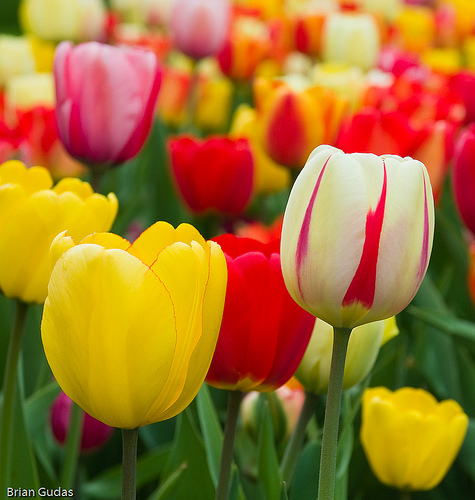
Tulips - The Vibrant and Elegant Flower


Tulip is a perennial( long lasting) plant that belongs to the family Liliaceae and it is believed that Tulip has around 150 species.. Tulip is native to Southern Europe, North Africa, Iran, Japan and Central Asia.. Tulips are always known for its vibrant colors, simplicity and elegance..That's what attracted me indeed..


If you are eager to know the history and meaning of Tulip flowers, check the following links :
proflowers.com/guide
buzzle.com/articles

Apart from their original species, many hybrid species are cultivated in some gardens and fields..Tulips are well adapted to the hilly, mountainous areas with moderate to cool temperature.. I have read somewhere that Tulips can be grown successfully in places where their altitude range from 1300 to 3000 feet high from sea level.Tulips are kept dormant for a while so as to enrich their growth.. As I surfed on the Internet, I have found a term called 'vernalization' , while mentioning about the growth of Tulips.. Vernalization is the phenomenon of cooling a seed during germination for accelerating their growth when it is planted..Tulips are one of the most famous spring flowers  in the world.. As we have seen before, Tulip has 150 species and it also has 3000 varieties.. Tulips are available in number of vibrant colors such as Red, Pink, Purple,White, Yellow, Orange and many more.. They grow at an average height ranging from 10 cm to 70 cm..

Tulips can be classified based on their blooming.. Some of the notable types of Tulips are,

*Early flowering Tulips
(They blossom in the period of March to early April- comprising Red Emperor, Water Lily
and Greigii Tulips ),
*Midseason Tulips
(They blossom in the period of April and early May - comprising Swan wings Tulips, Parrot Tulips
and Darwin Tulips)
*Late flowering Tulips
(They blossom in the period of May alone - comprising Rembrandt Tulips Fringed Tulips)

Tulip Cultivation in India :

           In India, Tulips have certainly gained more admiration among the floriculturist(The cultivation of flowering and ornamental plants) on the account of congenial climate in the hilly areas, especially in places like Kashmir . Asia's largest Tulip Garden, 'Indira Gandhi Memorial Garden' aka Siraj Bagh is located in Zabrawan range , Srinagar, Kashmir. It is where the annual Tulip festival is organised. As this garden is located in the shores of the Dal lake, tourists who arrive to enjoy the Dal Lake drive never miss this Tulip festival where these elegant Tulips are spread over 5 hectares of land. This Tulip festival is organised during the months of March and April annually. This year the Tulip festival 2013 was organised from 1st of April to 14th of April. These Tulip flowers can be witnessed in full bloom for 15-20 days depending upon the temperature.

Here are some pictures of Tulip festival 2013 in Kashmir :


Images Courtesy  : Jet-ways travel in Facebook


Check the following link for some more wonderful Tulip pictures :

lightstalking.com/tulips


I was planning to post this just before the start of the festival but it got delayed due to some technical problems. If you get the chance to tour here never miss the Tulip festival next year.

Have Colorful and Blessed days ahead :)
Thanks for reading.


26 March 2013

Stupendous values of Bael Tree


Bael (Aegle marmelos) - one of the prominent indigenous(native) trees of India. But now it is widely found in Southeast Asia. The Bael tree is considered to be a sacred one in India. The Bael leaves are used as holy offerings to Lord Shiva traditionally. It has been used by the Indians over 5000 years. It is believed that the Bael tree has originated during the vedic period(about 2000 B.C - 800 B.C) and it was mentioned in the  Yajur veda. It is believed that having this tree in our surroundings purifies and cleanses the environment. The Bael tree has stupendous medicinal values. They are one among the top ten herbs that are frequently used in Ayurveda. Almost all parts of this tree including root, stem, leaves and barks have medicinal values.
Click here to know more on sacredness of Bael tree.

Nomenclature :

Scientific Name     :   Aegle marmelos

Tamil Name          :   Vilvam (வில்வம் )

Sanskrit Name      :   Bilwa / Sirphala

Hindi Name          :   Sirphal

English Name       :   Wood apple / Stone apple / Bengal Quince

Common Name   :   Bael


Here's an image of the Bael tree sapling that I took at Sai Baba Temple, Mylapore, Chennai :


Another notable feature of Bael Tree is that they can withstand wide ranges of temperature, soil types and water logging. This holy tree can be planted in any type of soils having a pH range of 5 to 10. They bear the temperature ranging from -7 degree Celsius to 48 degree Celsius. Hence in India, it is believed that this tree can grow at places where other trees can't be grown and once planted they need just a little care. They can bear drought even for long periods. Being a sacred tree, the Bael trees are mostly found in the temple grounds. Only few people plant this tree in their gardens. The Bael trees are medium sized trees of height ranging from 8 to 18 meters. It has greenish-white flowers. The Bael fruits are hard and woody with smooth pulp. The fruits takes up to 11 months to ripe on the tree.


Images of Bael Tree and fruits from the Internet :


Medicinal values of Bael Tree :

As we read before, almost every parts of this Bael tree possess stupendous medicinal values. The Bael fruit has an immense value when it is about to mature.

             >* The half-ripe or unripe pulp of the Bael fruits are considered as stomachic. The oil from the Bael tree can be used against 21 types of bacteria as per research.

             >* As per Ayurveda,diarrhea and dysentery without fever can be cured using dry Bael fruit. and it acts as a tonic for heart and brain. It is also used for curing tuberculosis.

             >* The Bael leaf extracts are used to control the blood cholesterol levels. They are believed to be more effective in decreasing the cholesterol levels when compared to modern medicines.

             >* It is also said that the Bael leaf extracts can reduce diabetes to an extent. After some researches, it has been proved that the Bael leaf extracts have reduced blood glucose levels up to 54 %.

             >* Peptic ulcer can be cured by concoction of Bael leaves.

             >* Leaves, bark and root of the Bael tree are used in the treatment of snakebite.

             >* The ripe Bael fruit is also used to cure constipation and gastrointestinal problems. And it is used in many other ways for respiratory problems.

Note :  Do not follow or try this voluntarily.Kindly consult doctors or experts before consuming.

Some more facts on Bael Tree :

              As I read up on the internet the Bael fruit can be consumed like other fruits either when they are fresh or dried. They can also be made into juices as like lemon juice. The small shoots and leaves are used for green salads. It is said that the fruit also has some binding qualities which are used along with lime plaster for making water proof wells and mixed with cement for building walls in rural areas. It is good to know about these facts as I read on internet and would be nice if adapted everywhere. Then another interesting fact is that the Bael fruit pulp is added to the water colors by the artists to apply as a protective coating on their paintings. The Bael fruit is also used in the preparation of candy, pulp powder, nectar, toffee, slab, squash and many more.

               
Thanks for reading.