02 September 2013

VIBGYOR series 'I' for 'Indigo' - The Indigo plant - source of your Indigo jeans

This post is part of the Chennai Bloggers Club's CBC VIBGYOR BLOG TAG where some
of us will write a post on the colours of VIBGYOR each day starting 1st of September to 
the 7th of September. The colour theme for today's post is INDIGO

Do you all know from where does the color dye of your dark blue/indigo jean or the denim jean comes from ?  I'm not sure how many of us knows it. I came across about it only just when I was preparing this post. The main use of indigo as a dye was considered for a cotten yarn which plays a vital role in the production of Denim cloth for blue/indigo jeans. It is where the quest for indigo dyes came from once upon a time.  I read that this dye for dark blue jeans/Indigo jeans comes from the plant 'Indigofera tinctoria' and let us see about this plant here.

The meaning of Indigo color are being related to intuition, wisdom , perception and it is said to promote deep concentration.

Indigofera tinctoria is one of the plant which acts as a source for Indigo dye. As this plant has been grown worldwide, its native is still unknown. But this plant is said to be adopted by tropical and temperate Asia and several parts of Africa. But this plant is believed to be one of the native plants of India. In India, this indigo plant can be found in the some forests of South India, Maharashtra, Rajasthan, Punjab and Orissa.

Nomenclature:

Botanical Name    :    Indigofera tinctoria

Common Name   :     True Indigo/Nili

English Name      :     Indigo


The Indigo plant('Indigofera tinctoria') comes under the shrub category whose height ranges from 1 or 2 meters. Based on the climatic conditions they are cultivated, the plants were termed as annual/ biennial/ perennial. Its leaflets are pinnate and light green in color. The flowers of this plant comes in variety of colors like violet/pink or some intensive blue which is called as Indigo.

Some facts on this Indigo plant, 'Indigofera tinctoria' :

Indigo is said to be one of the most common dye right from the ancient times. Many Asian countries like India, China and Japan were said to be using this indigo dye for many centuries. Countries like Egypt, Peru, Greece, Rome, Britain and Africa were also been aware of this dye. But amidst of all countries, India is believed to be the oldest nation well known for its Indigo dyeing from the ancient years. It is believed that the Venetian explorer Marco polo was the first one to report about the preparations of Indigo dye in India when he passed through India in 13th century.

This dye plant was considered and said to be one of the cause for Mahatma Gandhi's first satyagraha against some taxation system by the British on the indigo cultivators in Champaran, Bihar, India. Indians were said to be the masters of this dye. This plant 'Indigofera tinctoria' was found to be one of the most high dye yielding plant compared to any other dye plants and hence the English country thought to explore about this in their own place. Before they could establish and cultivate this plant, it is said that India was the supplier of Indigo dyes to the Europe even before the Greek-Rome period. History says that this plant was one of India's foremost profitable export to the old world(Europe) in ancient times. It seems there was a revolt behind Indigo cultivation in a factory at West Bengal, India. Check that entire story behind that revolt in this link Click here


How do we get the dye from this plant ?

The Dye is said to be obtained from the leaves of this plant. The leaves are said to be soaked in water and they are processes to fermentation. This phenomenon helps to convert the glycoside indican (It is the fast occur blue dye)  present in the plant into blue dye indigotin - the indigo dye. Then this precipitate obtained form this phenomenon is said to be mixed with some strong base like lye which is encrusted, dried and powered. This final powder is mixed along with some more substances to give us the various shades of indigo blue colors.

Indigo plant extract sample
Indigo dye powder

Indigo Jeans

Images Source : Internet except the picture of jeans.


In today's technology-centric world, this indigo dye can be easily obtained through many chemical synthetic reactions from the various plants that has a specific chemical compound of Indigo. But once upon a time, few centuries back when the economic condition is too low, the indigo dye obtained from this plant 'Indigofera tinctoria' which is very rare those times were obtained by the above process and it was very expensive those days so that only the rich could afford it. But today due to the invention of synthetic indigo dyes, the demands were met and hence it became the cause for the decline of India's export of natural indigo.


Medicinal uses of the Indigo plant 'Indigofera tinctoria' :

                ~* The plant is said to cure chronic bronchitis.

                ~* It is said that it helps in reducing lumbago(pain in the lower back) and nervous disorders.

                ~* The juice extracted from this plant is used for treating hydrophobia.

                ~* The root and stem of this plant is used for curing heart diseases, hepatitis, fever, insanity and cephalalgia(Headache and head related pain).

                ~* Apart from this plant. the Indigo color is used in the treatment of thyroid problems.

                ~* The Ayurveda and Siddha medicinal systems uses this plant in the treatment of arthritis, vertigo (a sensation of whirling and loss of balance), worm infestations, jaundice, anemia, urinary complications, palpitations( irregular heartbeats) of the heart and asthma.

                ~* The bio-active components of leaves of this plant are used in the treatment of Lung cancer.

                ~* It is also used for hair coloring under specified directions and used for hair related diseases.

Note : Kindly consult any physician before using it.

Sources of Information :

http://www.satvikshop.com/
http://www.downtoearth.org
http://en.wikipedia.org
http://motherherbs.trustpass.alibaba.com/

Even though there is a decline in natural indigo dye in the recent past compared to today's synthetic indigo dye, the demand for natural dye is slowly increasing due to its medicinal values and its pollution less natural qualities. It is believed that at present this indigo plant is still being cultivated at many parts in India, especially in northern Karnataka, Africa and Central America.

Hoping that natural methods should be followed rather than the synthetic one for a pollution free environment.


01 September 2013

VIBGYOR Series - 'V' for 'Violet' - December flower


This post is part of the Chennai Bloggers Club's CBC VIBGYOR BLOG TAG where some
 of us will write a post on the colours of VIBGYOR each day starting 1st of September to 
the 7th of September. The colour theme for today's post is VIOLET

As soon as I came to know about CBC's VIBGYOR week( #CBCVIBGYORBLOGTAG ), I have just got into it without having a second thought since basically I love colors and posting about them seemed so interesting. And today I'm gonna start it with one of my favorite color Violet

The meaning of Violet color is often related to spirituality, royalty, good judgement and it is also said to be used in meditation.

I'm sharing about a flower which is in color of VIOLET. The plant name is Barleria cristata and it belongs to the Acanthaceae family which is commonly known as December flower. This plant is native to India, Southeast Asia, Southern China and Myanmar. It comes under the category of perennial shrub and it is well adapted to colder climates. The stem of this plant is said to be robust enough to withstand until they are frost and they can even flourish in poor soil conditions. It is considered to be a widely cultivated ornamental hedge plant.

Nomenclature :

Botanical Name - Barleria cristata

Common Name - Bluebell barleria / Philippine violet / Crested Philippine violet

Tamil Name      - Semmulli (செம்முள்ளி) / December poo(டிசம்பர்  பூ)

Hindi Name       - Vajra danti


This shrub ranges from 60 - 100 cm of height and the flowers are said to be 5 cm long. It is said tht some thorns arise at the axil of leaves. The flowers are available in variety of colors such as Violet, white, mauve and pink.

These flowers are also called as December flowers since they start blossoming in the month of December and they are found in abundance in the months of January and February. It is said to be propagated through cuttings and it adapts to more or less sunlight for growth.  Flowers are generally trumpet or funnel-shaped. This shrub needs pruning at regular intervals. As I have came across some sites some have mentioned that this shrub is invasive, but a researcher has said that it was a wrong perception. According to researchers they have said that it is pest resistant above the ground level and the root has to be protected properly from root-knot nematodes especially on sandy soils. Some have also mentioned it as a weed. They have suggested that before planting it must be layered with mulch and some organic matters. Some say that this plant welcomes humming birds.


Images Source : Internet

Medicinal values of Crested Philippine violet :

(The following uses includes folklore and as well as scientific facts)

                         ~* Leaves and roots of this plant are used to treat cough, bronchitis and pneumonia.

                         ~* The roots and leaves are also used to reduce swellings.
                   
                         ~* Seeds of this plant is said to be used as an antidote for snake bites.

                         ~* It is said to be used for toothaches and anemia.

                         ~* Some say that this plant can be used for blood purification and it is also used in the treatment of diabetics.

                         ~* The whole plant is said to be boiled in water for the treatment of cold and flu.

                         ~* The juice of roots of this plant is said to relief indigestion.

                         ~* It is said that the leaves of this plant are also used to treat hepatic diseases, but it is not proved yet.

                         ~* They were commonly used as garlands once upon a time.


Sources of medicinal use :

findmeacure.com
stuartxchange.com
biomedcentral.com


Despite having such beautiful flowers, this plant gets lesser attention these days when compared to the previous years. But still they do find a place as decorative flowers in some gardens. Some even use it for fencing the garden to give a uniform color around the boundaries. Hope this plant gets noticed better in the near future.


03 August 2013

Nutritious Pomegranate - Invaluable gift from God's paradise


Pomegranate ( Botanical Name :Punica granatum) is one of the oldest well known fruit which has stupendous values. It is categorized under shrub which is also said to be tree by some researchers. Its height ranges from 16 to 26 ft. Pomegranate is said to be a native of Persia. But it is widely cultivated in Africa, The Mediterranean, Europe, Indian subcontinents and in the Southeast Asia. It is considered under one of the powerful fruits.

As we move back to history, Pomegranate was said to be one among the oldest fruits since it was seen right from 100 B.C. The pomegranate is considered as a sacred tree in various religions. Almost every religion considered that the fruit has an eternal value. Many believe that it symbolizes prosperity,resurrection of Christ, fruitfulness, ambition and fertility. Ancient peoples considered this fruit as 'King of all fruits' and the most interesting fact about this fruit is that the crown shaped edge at the top of this Pomegranate fruit is said to be one of the reasons behind design of crowns that was used to honor the kings.


Pomegranate cultivation in India :

                  One of the major advantage about Pomegranate is, its drought - tolerance capacity. Hence it can also be cultivated in areas with hot climatic conditions. Among the world countries, India comes under a part of largest Pomegranate productions. As per National Horticulture Board in India, Pomegranate is commercially cultivated in Maharashtra at large scale. Whereas in states like Tamil Nadu, Karnataka, Andhra Pradesh, Gujarat, Punjab and Rajasthan there are cultivated at small scale. I read somewhere that about 60-70 percent export of Pomegranate from India comes from Maharashtra. In India, the Pomegranate plants generally grown throughout the year. It is said that the tree takes almost 4 to 5 years to bear fruits and once the fruit starts appearing it takes 120 - 130 days to get ready for the harvest.


Pomegranate Tree at Vellore


Images Courtesy : Internet
The image at the right is from my capture taken during an evening at Ratnagiri temple, Vellore, Tamil Nadu


The Pomegranate fruit may take such a long time to harvest, but I would say its quite worth waiting for such an astonishing fruit. The reason behind the words 'worth waiting' can be found below :

Astonishing values of Pomegranate :

                    ~* Pomegranate are said to be purely antioxidants. These Pomegranate seeds avoids blood clotting and it is said that it acts like aspirin tablet.

                    ~* Pomegranate seeds are very much good for the human heart. It is said to increase oxygen levels to the heart when consumed as juice.

                    ~* Pomegranate helps to reduce the risks of heart diseases, breast cancer, atherosclerosis (disease of arteries) and cholesterol. It also helps to control high blood pressure.

                    ~* It helps you to control your weight, fights against cell damage and it minimizes aging. This fruit helps you to avoid wrinkles in skin and helps to have a healthy skin.

                    ~* Pomegranate is used in the Ayurveda medicines over thousands of years. It is used to cure diarrhea, dysentery and intestinal diseases.

                    ~* The Pomegranate juice helps to prevent the risk of heart diseases, prevents viral infections and it helps to slowdown the worsening of human cartilage.

                    ~* Pomegranate is rich in fiber which helps proper digestion. Regular intake of this fruit helps to improve immunity and blood circulation since it is also rich in Vitamin-C.

                    ~* It also helps in reducing dental plaques(that causes tooth decay). The juice helps for strong teeth.

                     ~* The fruit and juice is used is said that it may prevent stroke and helps in reducing Alzheimer's disease.

                     ~* Since this fruit has natural sugars it is said to be safe for diabetes.

                     ~* It helps in fighting bone loss and helps during menopause.

Culinary Use :

                    ~* The seeds of the fruit can be taken directly or can be consumed in form of juice which has more advantage.The Pomegranate juice can be added in soups, sorbets and can also be used as flavors in cakes.

                    ~* Pomegranate seeds can be used in salads to increase the taste as well as to garnish.

                    ~* One of my personal experience is my mother used to sprinkle the Pomegranate seeds over the curd rice and give it. Just try this if you like. It tastes good and also adds nutritious value.


After reading this now, you might have understood why I said its worth waiting for this fruit. Make use of this wonderful invaluable gift from God's own nature.

I hereby thank my mother for suggesting me to post about Pomegranate.

Sources :  globalhealingcenter.com
                nutrition-and-you.com
                wikipedia.org
                National Horticulture Board.

Thanks for reading :)

23 July 2013

Canna Lilies - Best solution for water scarcity


Canna ( Canna Lily) plant is said to be a genus of nineteen species of flowering plants as per wiki. Even-though they are not a true lily, it is named so. The Canna Lily is a plant that has bright color flowers and it is also an agricultural plant. This Canna lily plant is considered to have the world's richest starch sources. It is tropical American plant which needs at-least 6 to 8 hours of sunlight. Due to this feature, this plant is grown around the world where these condition can be met. The flowers of this plant of usually red, orange or yellow in color.


Images Source : Internet

Uses of Canna Lily :

   ~ They are widely used in Horticulture and as ornamental plants.

   ~ The rhizome ( i.e. horizontal underground stem ) of this plant is said to rich in starch which can be consumed by humans. The foliage( plant leaves) is used as animal fodder.

   ~ The fiber in the stem can be used as a replacement for jute.

   ~ The seeds are used as beads in jewelry and it is said that a purple dye can also be obtained from these seeds.

   ~ In Thailand, these Canna plants acts as a traditional gift for Father's day.

   ~ If you are an ardent bird watcher then it would be an additional treat for you to plant this plant as this plant attracts humming birds.

   ~ Last but not the least, most importantly, the Canna lily plant can be used to filter the impurities/pollutants. 


Now coming to the main crux of this post, the grey water recycling done with the help of this Canna plant can save you from water scarcity. This is what I have read about just few days back.

What is Grey water ?

           Grey water is nothing but the waste water that is being produced from baths, sinks and washing machines. This grey water completely differs from black-water which is a sewage. Hence grey water is safe to use and recycle.

Grey water recycling (GWR) :

           Grey water recycling (GWR) is done in many ways. The recycled water is used widely used for irrigation purposes , indoor reuse and in critical situations. The vital point to be noted is not all kind of purification methods is potable. Some of the recycling methods were done without purification and some were done with purification.

The grey water recycling process that I have read in 'The Hindu' Newspaper just few days back comes under the recycling method with purification that is done in the biological way which includes this Canna plant as a main source for purification.

Here's the link from 'The Hindu' newspaper where I read about this process :

http://www.thehindu.com/features/homes-and-gardens/

If you go through that entire article, you can understand how much benefits we would get through this process. It is mentioned that this GWR process was already mentioned along with the rain water harvesting system that was implemented in the year 2002. But very few are aware about this till date. Today, almost many cities including Chennai are in quest for uninterrupted water supply especially during the summer. An apartment in Adyar, Chennai is said to be free from this quest as they have implemented this process with the help of the Canna lily plant.

I hope that this process would be a solution for water scarcity, pollution free environment and for an adequate ground water source.

Thanks for reading :)

07 July 2013

Furious Nature - The Uttarakhand Tragedy


Nature is not just known for its beauty, but also for many disasters. It is all about how carefully we treat our nature. When we cause so much harm to our own surroundings, it shows off the result in some means of disasters.Everyone of us would have heard about the recent disaster that had happened in Uttarakhand where many of them died and most of them were stranded. It is widely said that this Uttarakhand tragedy is not uncommon since that area is always prone to natural disasters. But some researchers and environmental enthusiasts say that it is also caused due to deforestation, construction of more dams that needs tunneling the ground and also due to some careless constructions of buildings, lodges and homes in the river bed which are being washed away in the floods.

Uttarakhand aka Uttaranchal is a northern state of India which was partitioned from Himachal Pradesh and Uttar Pradesh. As per wiki it is said that Uttarakhand is the 19th most populated state in India. Since Uttarakhand is mostly covered by mountains ( Himalayas in the northern side) and forests it acts an important tourist site. Uttarakhand is one among the most famous pilgrimage sites where the sacred temples like Kedarnath and Badrinath is located. It is where the two major rivers of India the Ganga and the Yamuna originates at Gangotri and Yamunotri respectively. They were said to be caused by the glaciers melts, lakes and streams in their place. Adding to this there are two national parks such as the Valley of Flowers and the Nanda Devi national park located in the Chamoli district of Uttarakhand which are considered under the UNESCO World Heritage Site. Many of the most famous hill stations of India like Nainital and Mussoorie are located in Uttarakhand.


Being such an enriched state, Uttarakhand has also been prone to earthquakes and floods always. But this time it has faced something bigger and harder than before I guess. As we all know there was a major cloudburst in the state this year in MID-June, it is said that it takes almost two or five years to resume back to normal. Since the tragedy has happened in the middle of the pilgrimage season, thousands of lives has been ruined. Due to this cloudburst, heavy floods had washed away many lives, buildings, pathways and bridges which made many people left stranded and helpless. Many lodges, hotels and houses have also been washed away by floods. The surprising fact is that despite this heavy downpour and lashing floods has washed away the compound walls of the Kedarnath temple, the Kedarnath Shrine has survived and is safe. And it is also said people inside the shrine has been saved while others were dead in front of the temple.


Images Courtesy : Ibnlive.com

But anyhow people whomever have survived this calamity had said that they have found and seen God in the Indian army and the ITBP ( Indo- Tibetan Border Police ) who played a brilliant and vital role in rescue operations. NDRF ( National Disaster Response Force )and NDMA ( National Disaster Management Authority ) have also done their part in the rescue operations. They used some ladders, ropes and even constructed small winch like machines to evacuate people. Most of all the IAF ( Indian Air Force) have also done a major Chopper evacuation to rescue stranded people. But the hardest part is many people have missed their loved ones.

Salute to all the brave hearts of the Indian Army, IAF, ITBP, NDRF, NDMA and some adventurer's who played a vital role in saving lives.

Many people who went there along with family members, have missed some or whole while returning back. It is reported that some people who have been rescued have placed some camps there and are waiting for their family members with hope. Despite these rescue operations, as I have read yesterday in the web that almost 1200 children were still missing. And the most terrible part is a 3 year old girl who is rescued with fractured legs is missing her family. She was found alone at Gaurikund and she got treatment at Doon hospital, Dehradun and got recovered now. Unfortunately this young child couldn't find her family yet. Hope their family reaches her soon.

Here I'm sharing few websites through which you can help since there are still missing peoples and relief's are being distributed.

http://chennai-cares.blogspot.in/
http://www.savethechildren.in/
http://www.giveindia.org/

'Google crisis response' has played a vital role to find the stranded people. They have also provided maps related to floods. Additional information's were provided in PTI.
Uttarakhand Floods Information as provided by Google :

Uttarkashi                                : (+91) 1374-226461
Chamoli                                   : (+91) 1372-251437, 9411352136
Rudraprayag                            : (+91) 1364-233727, 9412914875
Control Room (Uttarakhand)   :  (+91) 135-2710334, 9557444486

Since many people are still missing, the NDRF are planning to deploy some devices to trace them. As per this move, they have accepted to use a drone named 'Daksha' designed by Dr.Senthil Kumar of the Madras Institute of Technology ( MIT ). Here's an article from The Hindu Newspaper about it.
http://www.thehindu.com/

And kindly check this following link for some information regarding the cause of floods, how it can be tackled etc.,
http://ibnlive.in.com/news/

Preventive measures for such Natural disasters :

                   * We can't stop a natural disaster, but still we can avoid some of the causes of it. First thing is as much as we can, we must stop constructing buildings in or near the river beds.

                   * We must stop deforestation which is a very concerned issue. By cutting down the trees, we ourselves are creating damage to ourselves. By planting trees or conserving the existing trees we can make sure that excess water is consumed by the roots of the trees. In places like Uttarakhand, deforestation in mountains causes the landslides. It is said that planting Oak and Pine tress in these places could help to resist such situations.Have a look at this link in the Economic times about this: http://economictimes.indiatimes.com/

                   * A proper rain water harvesting system and drainage system has to be constructed in a way that  it collects excess water. It is said that proper maintenance of these systems can avoid landslides.

                   * Constructions of dams must be regulated properly.

                   * Weather forecasting systems can be updated and regulated properly.

Hope we can still handle such situations wisely by studying the nature of our locality and regulate the activities according to it to avoid major disasters.

Hoping that everyone finds their missed loved ones soon.

20 June 2013

Birdwatching - A recreational and a colourful activity


Birdwatching is the practice of observing birds and it is considered as one of the recreational activities. I would regard it as a blissful activity. Bird watching can be done using binoculars, telescope and even with a naked eye. It is believed that bird watching has been in practise as a hobby since 1968. Bird watching activity is not merely a refreshing activity, but it also paves way for identifying and knowing some birds of our own locality.


As I myself haven't tried this officially, I would like to share some of the procedures to be followed for bird watching that I read while surfing in the Internet.

Steps for Bird-Watching :

* First get an up to date Bird guide of your locality,

* Get a pair of binoculars( make sure it is of light-weight),

* Find friends of similar interests to accompany you,

* Start bird watching in the morning as birds would be busy in search of food and building nests. An ideal time for bird watching is early morning or just few hours before sunset.

* Start finding the birds from your own garden or backyard,

* Be quite, alert and attentive enough to hear the bird chirps or songs which makes easy to locate them,

* When you find a bird check it in the guide. Dont look for a similar colour of bird as in the guide, just check the whether it has similar features as colour many vary at times, the characteristics remain the same.

* Note down all your findings,

* Make sure that you don't disturb any birds while the activity. Maintain some distance so that they dont flew away or attack as you may near their nests. Do not disturb their privacy.

* Place some bird feeders in your garden or balcony so that you may invite many birds and you could easily witness different birds of our locality.

* Make sure that you hide in a place while capturing some pictures of them or noting them so that the birds wont get scared.

* Last but not the least, try your part in safeguarding their existence.

Birdwatching in India :

I was amazed while surfing about birdwatching in India. India is believed to have around 1250 species of birds and hence it acts as a kingdom of birds. It is said that out of 27 orders and 155 families of birds species that have been noted down by many bird enthusiasts around the world, India has 20 orders and  77 families. Despite having such richness in our biodiversity, we are aware of only fewer kind of birds. It is clear that we are less aware of our biodiversity and we do rarely spend time in knowing about our biodiversity and yes birdwatching activity would help us here in such situations. Despite living a incessant life in today's world, we can spend few hours in the weekends to relax ourself in such kind of activities.

Bird lovers have a look into this website - http://www.indiabirds.com/
I just love it. You can hear the sounds and chirps of many different birds of India in this website. You can also check the videos and qulaity pictures of Indian birds here. Bird lovers don't miss this site.

Birdwatching in Chennai :

Chennai might be the hottest place ever in summer. Despite that I read that Chennai still acts as a haven for more than 200 species of birds. As Chennai is located at the coromandel coast of south India, the geographical features of Chennai plays a vital role in attracting many birds. Most of the birds visit Chennai during the seasons from October to March.

Here's a list of places where you can do birding/birdwatcing in Chennai :
  • Adyar Eco Park/Tholkappia Poonga (Situated on the banks of Adyar Estuary),
  • Chembarambakkam Lake,
  • Guindy National Park,
  • Indian Institute of Technology( IIT ) campus, Madras
  • Kelambakkam Muttukadu Backwaters ( Best time to visit : November to February),
  • Karikili Bird Sanctuary ( located 6 kms away from Vedanthangal Bird Sanctuary ),
  • Madhavaram and Manali Lakes ( Best time to visit during NorthEast Monsoon),
  • Mudaliarkuppam Backwaters,
  • Nelapattu Bird Sanctuary,
  • Nanmangalam Reserve Forest,
  • Pallikaranai Marsh ( Best time to visit : November to May),
  • Pulicat Lake/Shar Road and Annamalaichery Backwaters,
  • Siruthavur Lake,
  • Theosophical Society Gardens,
  • Vedanthangal Bird Sanctuary ( Best time to visit : November to February) and
  • Vedanthangal scrub and reed bed.
Note : Check with the concerned authorities before visiting any of these places as they require permissions.

Apart form all these places, there are some other places where native birds can be found more than migratory birds. It was interesting to know about an unknown and uncommon place for bird watching in Chennai. I found this information in one of the websites I surfed on the Interent. Probably some of them may know or may not know this place located between Tiruporur and Tirukazhukundram. It is said to be reserve forest area where we can witness a lot of native birds and hence note that you don't get into the reserve forest area without permissions.

Here I'm sharing some pictures of birds in Chennai from the web :

Indian Robin
Rose Ringed Parakeet


Purple Rumped Sunbird- Female
Common Myna

 
Common Tailor Bird

Asian Koel


Spotted Dove
 
Red vented Bulbul


Greater Flamingo in Pulicat Lake
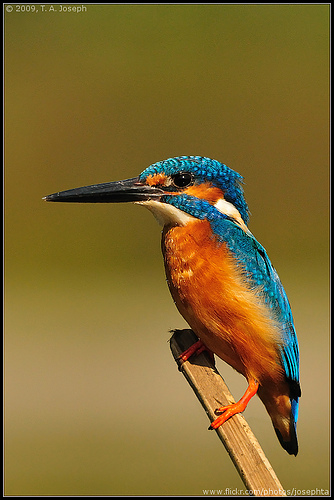
Small Blue Kingfisher


Images Source : Internet
There are many more birds of Chennai. You can check the list of birds of Chennai in this link : en.wikipedia.org/wiki/

Keep exploring about the birds around your place and have a touch with our biodiversity to know about the hidden values of our environment.

Thanks for reading :)